
Our Nursery
Our curriculum is based on the Statutory Framework for the Early Years Foundation Stage (2025). According to the EYFS; “There are seven areas of learning and development that must shape educational programmes in early years settings. All areas of learning and development are important and inter-connected.” The seven areas of learning and development are:
-
Communication and Language development involves giving children opportunities to experience a rich-language environment; to develop their confidence and skills in expressing themselves and to speak and listen in a range of situations.
-
Personal, Social and Emotional Development involves helping children to develop a positive sense of themselves and others; to form positive relationships and develop respect for others; to develop social skills and learn how to manage their feelings; to understand appropriate behaviour in groups; and to have confidence in their own abilities.
-
Physical Development involves providing opportunities for young children to be active and interactive; and to develop their co-ordination, control, and movement. Children must also be helped to understand the importance of physical activity and to make healthy choices in relation to food.
-
Literacy development involves encouraging children to link sounds and letters and to begin to read and write. Children must be given access to a wide range of reading materials (books, poems, and other written materials) to ignite their interest.
-
Mathematics involves providing children with opportunities to develop and improve their skills in counting, understanding and using numbers, calculating simple addition and subtraction problems; and to describe shapes, spaces, and measure.
-
Understanding the World involves guiding children to make sense of their physical world and their community through opportunities to explore, observe and find out about people, places, technology and the environment.
-
Expressive Arts and Design involves enabling children to explore and play with a wide range of media and materials, as well as providing opportunities and encouragement for sharing their thoughts, ideas and feelings through a variety of activities in art, music, movement, dance, role-play, and design and technology.
"Children arrive happily at the setting…Key persons work closely with parents and carers resulting in children quickly settling in."
(Ofsted report. November 2023)
Bees Room
The Bees room is for children aged between 6 months to around 2 years 6 months. Here, the focus is on the three prime areas of learning defined by the EYFS which are: Communication and Language (CL), Physical Development (PD) and Personal, Social and Emotional Development (PSED).
In the Bees room, each child is assigned a key-person. The role of the key-person is to ensure that the prime care of the child is tailored for and that their educational needs are met. The key-person supports the new child to settle-in and become familiar within the setting. The key-person’s aim is to form a secure bond with their key-child and build a close relationship with the child and their parents.
The Bees Room aims to provide a balance between child initiated and adult-led activities. The children engage in open-end free play, sensory activities and circle time for singing and short stories. The children also have two live music sessions per week where the children can explore a wide variety of instruments and engage in communication and interaction through music and dance.
Rabbits Room
The Rabbits Room is for children aged between 2 years 6 months to 4 years. Here, the focus is on the 7 areas of learning defined by the EYFS which are: Communication and Language development (CL), Physical development (PD), Personal, Social and Emotional Development (PSED), Literacy (L), Mathematics (M), Understanding the World (UW) and Expressive Arts and Design (EAD). The key-person system is maintained throughout the child’s placement to give them a continuity of care, emotional security as well as maintaining a close partnership with parents.
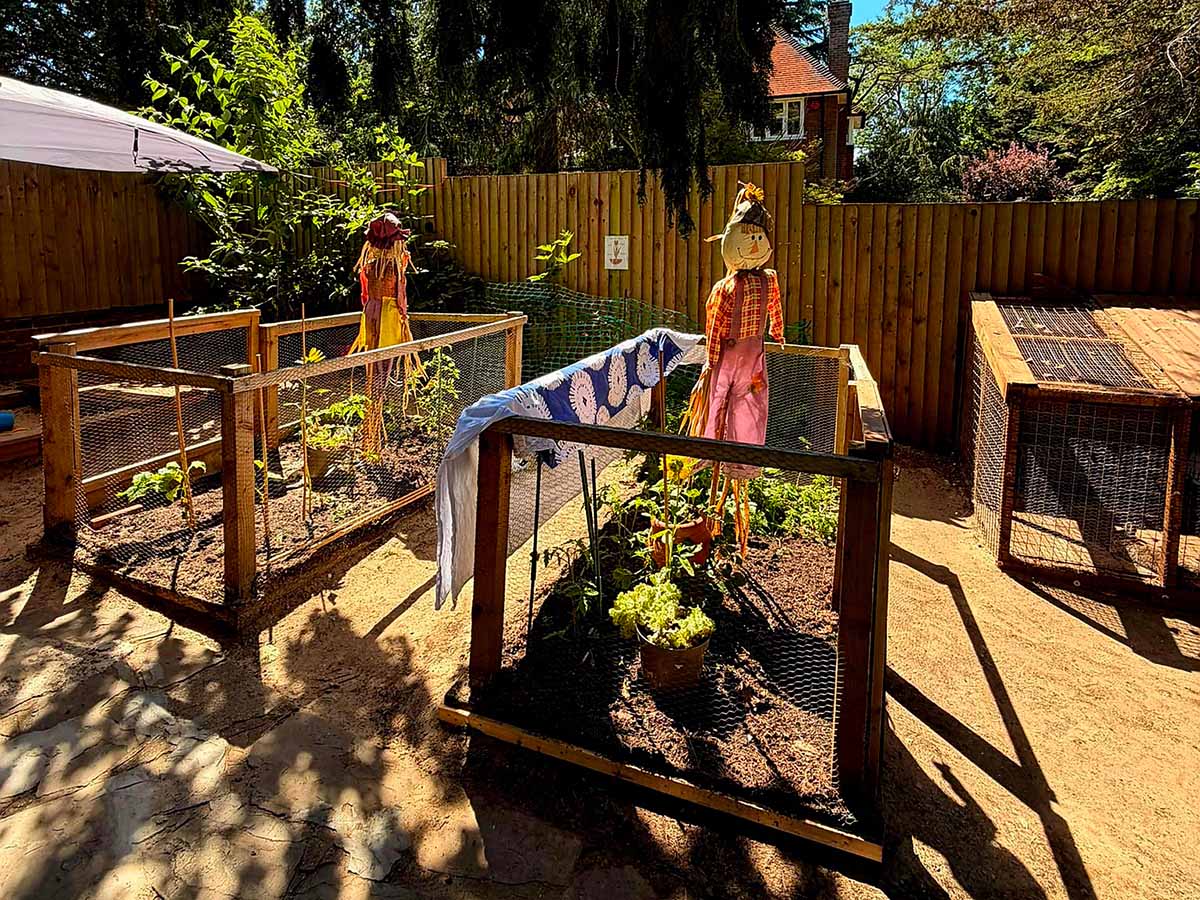
The Rabbits Room aims to provide a balance between child-led and adult-initiated activities. Therefore, the children are encouraged to free-flow between indoors and outdoors to help them make their own choices and to engage in open-end free-play.
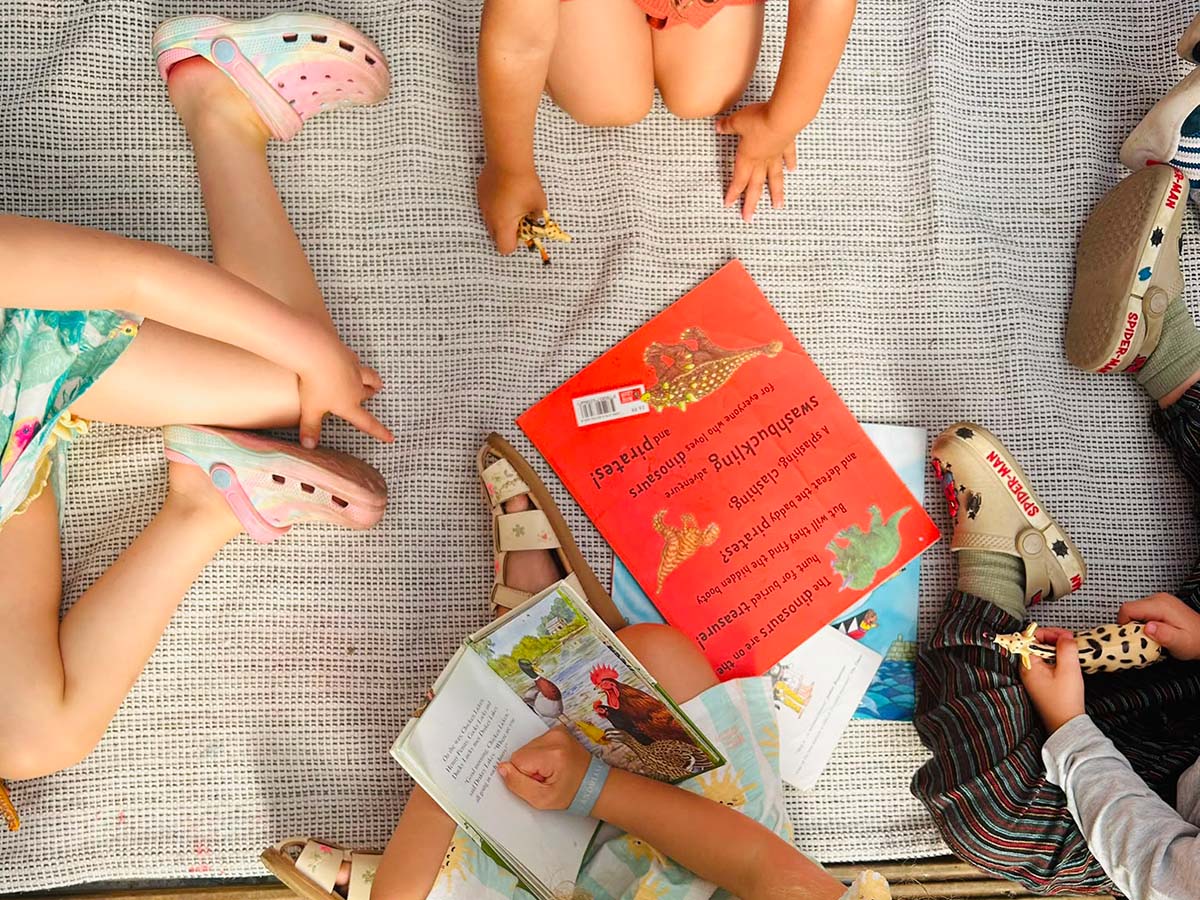
The Rabbits room also provides adult led activities, such as circle time. Here, the children are split into groups according to their age. The younger group is for the 2-3 year olds and the older group is for the 3-4 year olds. For the younger group, we focus on sensory play, stories and singing. For the older group, we use the Letters and Sounds Phase One Phonics Programme to plan activities. In addition, we read stories, have discussions based on Understanding the World and engage in Maths activities.
Other planned activities include weekly live music sessions, regular cooking groups and local community trips.

Tapestry
At Woodlands, we use an online journal called Tapestry to record your child’s learning and development. Each child will have an individual online learning journal that records their progress through photos, videos and observations. Parents will have secure access to view their own child’s learning journal. They can also make their own contributions by adding comments, photos and videos from home.